
3D cell culture – bridging in vitro and in vivo biology.
Three-dimensional (3D) cell culture has become an essential tool in modern life science research, as it enables cells to grow and interact in a spatial architecture that more closely resembles native tissue environments.
In contrast to conventional two-dimensional (2D) monolayer cultures, 3D cell culture systems support enhanced cell–cell and cell–matrix interactions, physiological gradients of oxygen, nutrients, and signaling molecules, and more relevant cellular phenotypes. As a result, 3D models often provide improved biological relevance and predictive power compared to traditional 2D assays.
Why 3D spheroids matter?
Growing cell cultures as 3D spheroids on low-adhesion plates is essential because it mimics the natural cellular microenvironment more accurately. It promotes cell–cell interactions and nutrient diffusion, which are crucial for cell behavior and drug response studies.
Consistent quality for reliable 3D cell culture data
The consistent quality of the BIOFLOAT™ surface makes it a premium product for 3D cell culture, ensuring reproducible data for all kinds of cell lines, including cells that fail to generate spheroids on existing products.
Explore our website to learn more about the various ways in which 3D cell culture promotes scientific understanding in a variety of fields of study, such as:
- ● Individualized medicine
- ● Drug discovery
- ● Cancer research
- ● High throughput screening
Advantages of BIOFLOAT™ spheroid culture systems
To this end, BIOFLOAT™ pre-coated plates offer the following advantages:
- ➤ Compared with benchmark plates, BIOFLOAT™ coated plates allow the formation of one round cell spheroid per well, an important criterion for reproducible, reliable and high-throughput analysis.
- ➤ In most cell culture systems, spheroid size is determined by the initial seeding density, which can differ between cell lines.
- ➤ To recapitulate the cellular heterogeneity found in solid tumors, spheroids are often cultured as co-cultures with different ratios of cancer and stromal cells to better mimic in vivo conditions.
For cancer research, it is essential to generate a modifiable in vitro platform to understand the growth and progression of solid tumors. In this regard, the BIOFLOAT™ spheroid culture system is an excellent choice, allowing the generation of round and uniform spheroids whose morphology can be easily fine-tuned by modifying initial seeding numbers or cell line models.
BIOFLOAT™ – innovative technology for perfect 3D spheroids
BIOFLOAT™ plates show stable quality and performance in our experiments. The plates are biologically inert, cell- and protein-repellent.
The system is time-saving and easy to use, enabling fast spheroid generation and quick experimental setup. BIOFLOAT™ plates allow the rapid formation of round and reproducible spheroids, ensuring high data consistency. They are reliable and robust.
Advantages of BIOFLOAT™ spheroid culture systems
To this end, BIOFLOAT™ FLEX or pre-coated plates offer the following advantages:
● Compared with benchmark plates, BIOFLOAT™ coated plates allow the formation of one round cell spheroid per well, an important criterion for reproducible, reliable and high-throughput analysis.
● In most cell culture systems, spheroid size is determined by the initial seeding density, which can differ between cell lines.
● To recapitulate the cellular heterogeneity found in solid tumors, spheroids are often cultured as co-cultures with different ratios of cancer and stromal cells to better mimic in vivo conditions.
● One cell line often acts as feeder cells for the other cell line.
For cancer research, it is essential to generate a modifiable in vitro platform to understand the growth and progression of solid tumors. In this regard, the BIOFLOAT™ spheroid culture system is an excellent choice, allowing the generation of round and uniform spheroids whose morphology can be easily fine-tuned by modifying initial seeding numbers or cell line models.
![BIOFLOAT™ FLEX coating solution [F202005]](https://facellitate.com/wp-content/uploads/2026/03/Flex-430x430-1-300x300.jpg)
![BIOFLOAT™ 96-well plate F bottom [F202301]](https://facellitate.com/wp-content/uploads/2026/01/Untitled-design-1-17-300x300.png)
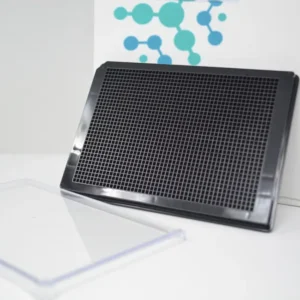
![BIOFLOAT™ 6-well plate [F202302]](https://facellitate.com/wp-content/uploads/2026/01/Untitled-design-38-300x300.png)