BIOFLOAT™ 384 well plate is recommended as top performers for spheroid
formation in the Biotechnology Journal
“The choice of ultra low attachment plates impacts primary human and primary canine hepatocyte spheroid formation, phenotypes and function” conducted at the Karolinska Insitutet by the group of Prof. Dr. Volker M. Lauschke
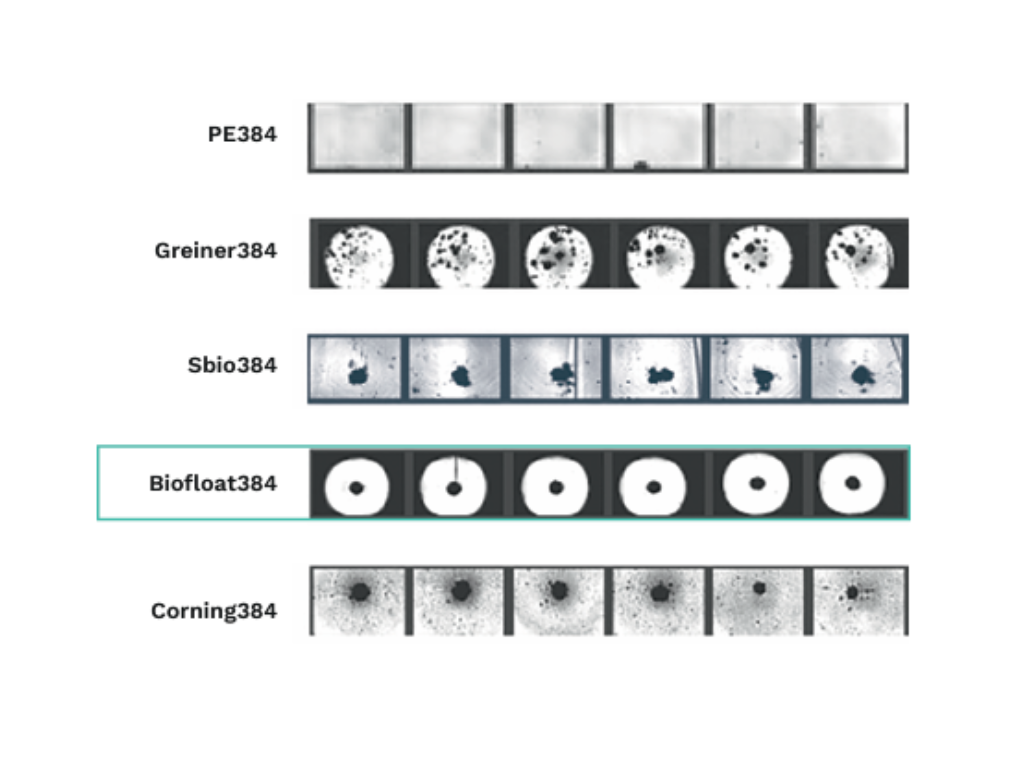
Highly reproducible spheroid formation in BIOFLOAT™ plates
The authors observed 100% single spheroid formation of primary human hepatocytes only in BIOFLOAT™ plates among the tested 384-well plates.
BIOFLOAT™ plates are particularly well suited for high-throughput pharmacological and toxicological experiments.
BIOFLOAT™ plates allow for the rapid and reproducible formation of spheroids from human primary hepatocytes. Formed spheroids have unique properties in terms of uniformity, viability and excellent reproducibility of key cellular properties.
Rapid spheroid formation in BIOFLOAT™ 384 well plate
The figures show considerably faster primary human hepatocyte spheroid formation in BIOFLOAT™ plates (3 days) compared to competitor plates (5 to 6 days).
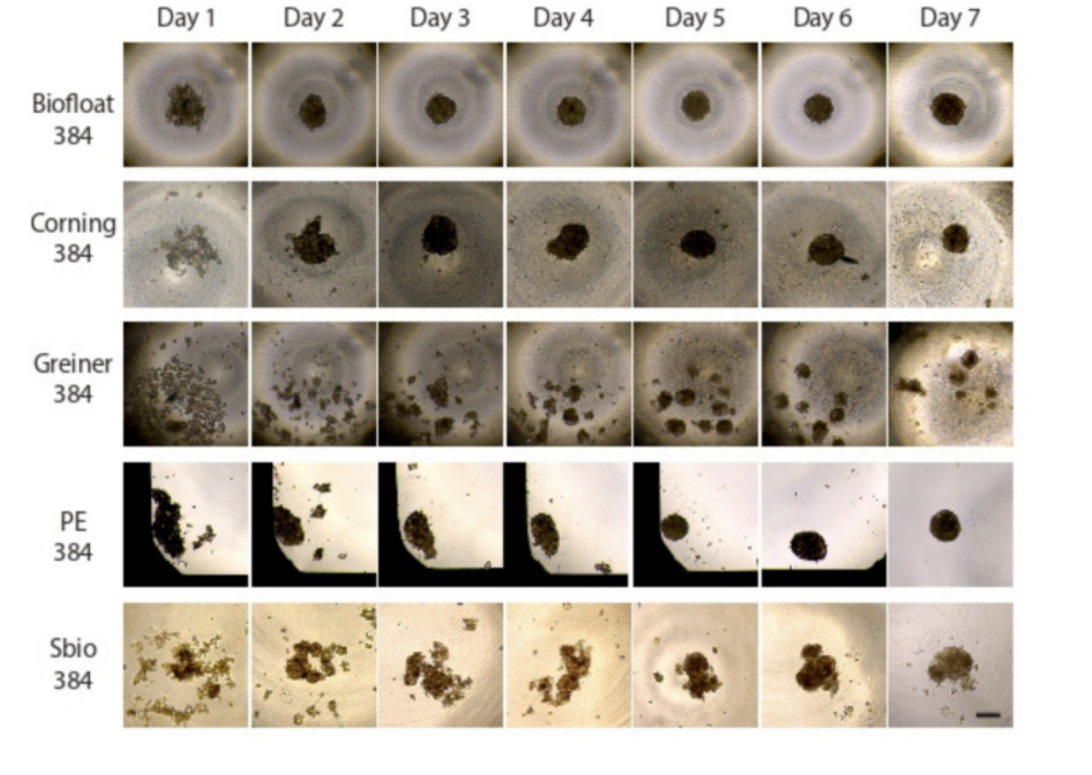
BIOFLOAT™ 384 well plate is best suited for high-throughput pharmacological and toxicological experiments.
Metabolic active spheroids in
BIOFLOAT™ plates
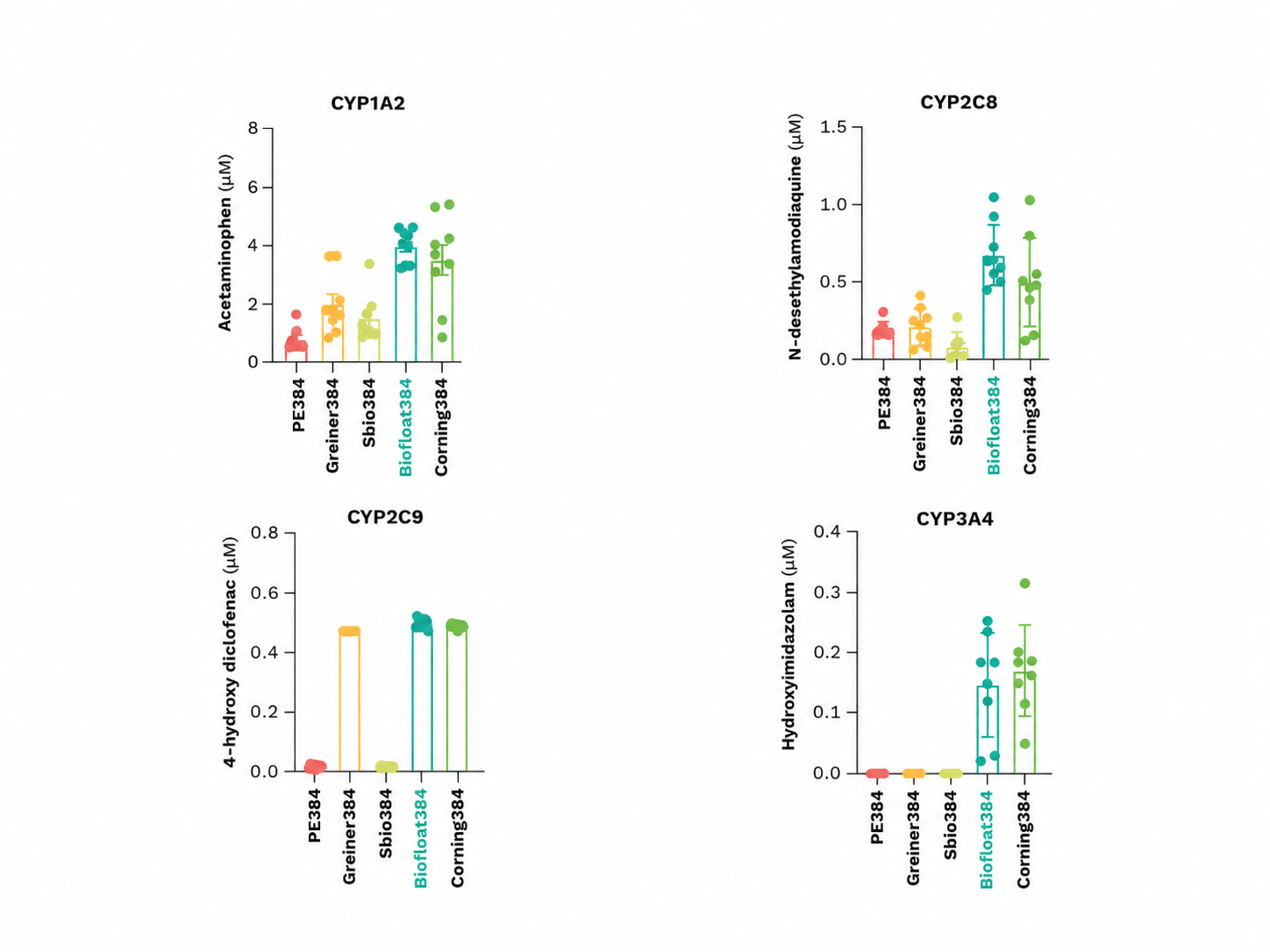
In the benchmark study, primary human hepatocytes formed spheroids with high metabolic enzyme activity in BIOFLOAT™ plates.
BIOFLOAT™ plates showed the lower variability between different measurements of the same metabolite compared to competitor plates -> High data consistency and reproducibility.
Long-term cultivation of viable spheroids in BIOFLOAT™ plates
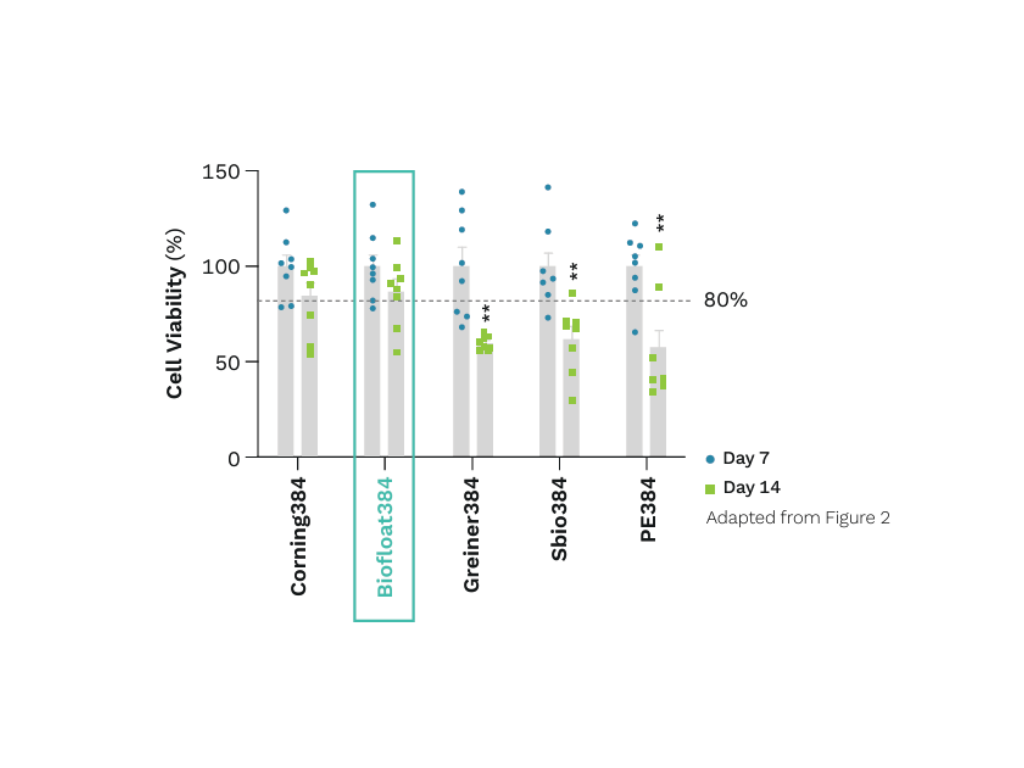
According to the results of the benchmark study, BIOFLOAT™ plates enable long-term cultivation of highly viable primary human hepatocyte spheroids. ATP levels dropped significantly already at day 14 in almost all other plates.
The variability between different measurements of analytical parameters like metabolic enzyme activitiy is lower in spheroids formed in BIOFLOAT™ plates compared to spheroids formed in other ultra-low attachment plates.
Want to make sure BIOFLOAT™ 384 well plate is suitable for your cell culture?
Not sure whether BIOFLOAT™ 96-well plates are suitable for your cell culture model? For this reason, we offer a free sample so you can test the plate directly in your own application. This way, you can evaluate spheroid and organoid formation under your specific experimental conditions.
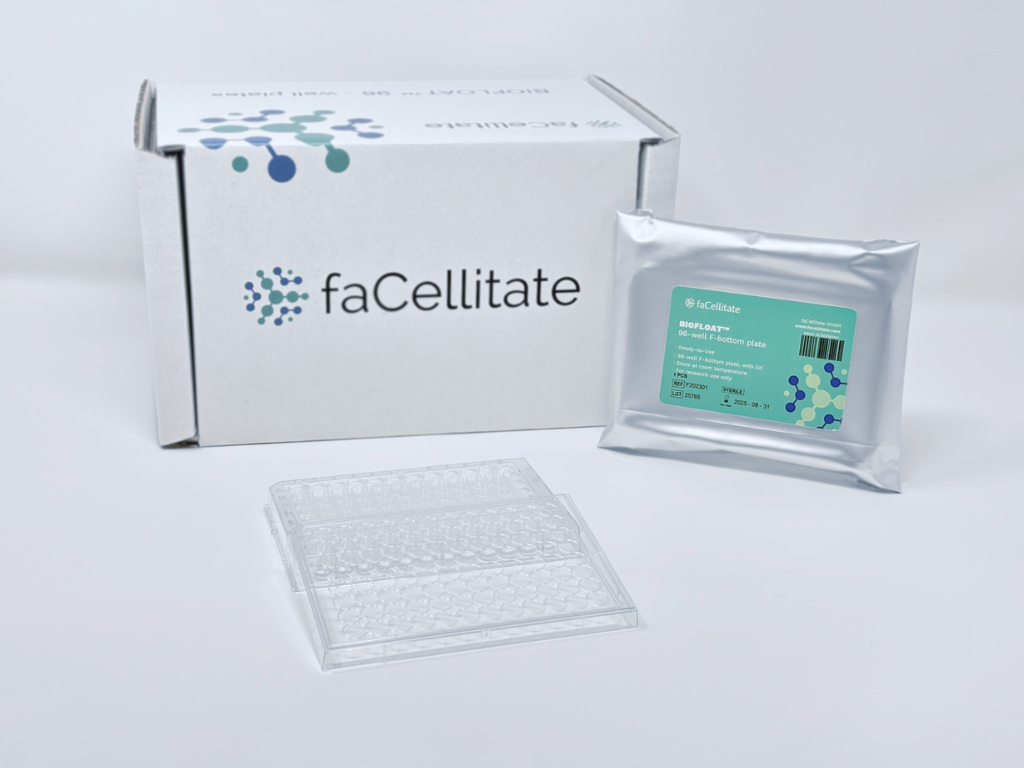
Ready-to-use for spheroid cell culture
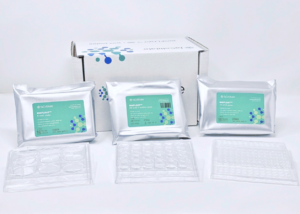
The BIOFLOAT™ 384 well plate provides a highly defined, fully inert, and cell-repelling surface.
Product Characteristcs
Plate color: clear
Well bottom: round (U – bottom)
Recommended working volume: 50 µl
Material: Polystyrene (PS)
Sterile: yes
Made in Germany
Quantity: bag of 4 plates
The reliable quality of the BIOFLOAT™ cell culture surface enables the formation of perfect spheroids
even for challenging cells. This also includes cells that do not form spheroids on existing products.

Cardiac myocytes

Endothelial cells

Primary hepatocytes

Alveolar epithelial cells

Neuronal stem cells
Fibroblasts (M. musculus)
Squamous cell cancer cell line (H. sapiens)
Melanoma cell line (M. musculus)
Colon carcinoma cell line (H. sapiens, Caucasian)
Pancreatic adenoma cancer cell line (H. sapiens)
Ovarian cell line (C. griseus)
Epithelial breast cancer cell line (stem cell-like)
(H. sapiens)
Tumourigenic breast epithelial stem cell line from
D492 cells (H. sapiens)
Pancreatic cancer cell line (H. sapiens)
Embryonic stem cells (S. scrofa domesticus)
Pancreatic adenoma cancer cell line (H. sapiens)
Lung adenocarcinoma cell line (H. sapiens)
Breast cancer cell line (H. sapiens)
Colon cancer cell line (H. sapiens)
Primary dental pulp stem cells (H. sapiens)
Pancreatic cancer cell line (H. sapiens)
Immortalised osteoblasts (H. sapiens)
Venous endothelial cells (H. sapiens)
iPSC-derived hepatocytes
Breast cancer cell line (H. sapiens)
Pancreatic cell line (H. sapiens)
Hepatic stellate cells/Ito cells (F norwegicus)
Hepatic stellate cells/to calls (r. Sapiens)
B-lymphocyte cell line from myeloma patients
Immortalised astrocytes (H. sapiens)
Differentiated fatty cell organoids from pluripotent stem cells
Endometrial organoids from detached primary cells (non-human primates)
Fibroblast progenitor cells (M. cerebralis)
IPSC-derived cardiomyocytes (H. sapiens)
Liver organoids (differentiated) (M. musculus)
Neuronal stem cells (HN9 differentiated)
Primary hepatocytes (H. sapiens, M. musculus,
M. fascicularis, C. lupus famillaris)
Raw Material Processing
The product does not use any rawmaterials of animal or biological origin and therefore does not have TSE/BSE.
The polymer raw materials used for coating plates were positively evaluated for quality consistency using GPC, GC-MS and NMR spectroscopy.
The sterile, non-pyrogenic/endotoxin-free, non-cytotoxic, DNase-/RNase-/DNA-free multi-well plates were coated using pipetting robots. Coated plates were sterilized by electron beam irradiation
Downloads & Links
Check out our products
Application Notes
Product Sheet
White paper
Check out our products
Trusted by and Published in Prominent Journals










Our Partners