
Amphiphilic Copolymers for Versatile, Facile, and In Situ Tunable Surface Biofunctionalization
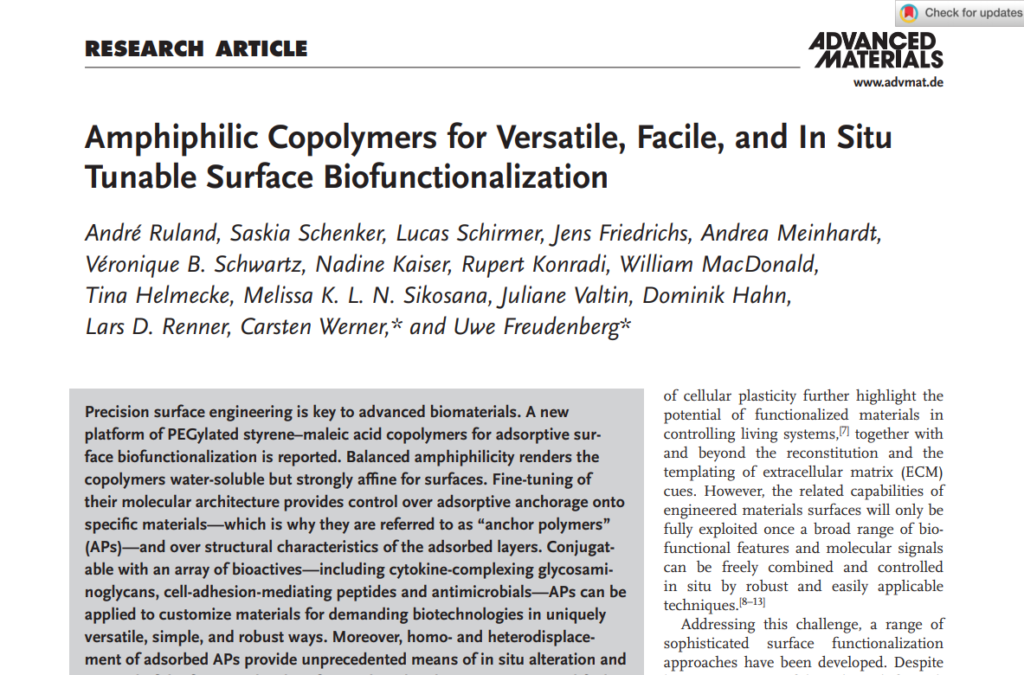
We are proud to present this new paper on “Amphiphilic Copolymers for Versatile, Facile, and In Situ Tunable Surface Biofunctionalization” which was just published together with our long-standing collaborators at the Leibniz Institute of Polymer Research Dresden (IPF)
This paper presents a versatile platform for surface biofunctionalization using amphiphilic PEGylated styrene–maleic acid copolymers, called anchor polymers. These polymers can easily adsorb onto many material surfaces from water-based solutions and create stable, functional coatings without complex chemical modification.
The system is modular: different bioactive molecules, such as cell-adhesive peptides, heparin, or antimicrobial compounds, can be attached to the polymers. This allows surfaces to be tuned for different biological functions, including reducing bacterial adhesion, supporting specific cell attachment, or guiding cell behavior.
A key advantage is that the coating can be adjusted or renewed in situ, making the technology flexible and practical for cell culture, biomaterials, and biofunctional surface applications.